




iteso
Departamento de Estudios Socioculturales

Ofrece una formación integral que prepara a sus estudiantes para comprender y transformar las realidades social, cultural y política, desde una perspectiva ética, crítica y comprometida con el bien común.

Esta formación se concreta en planes de estudio que abordan los sistemas y procesos de significación y producción de sentido desde diferentes perspectivas, incluyendo las ciencias sociales, los estudios socioculturales, la comunicación, el arte y la cultura. Asimismo, el Departamento propicia un ambiente académico que promueve el pensamiento crítico, la reflexión ética y el compromiso social, además del desarrollo de proyectos de investigación y de vinculación que permiten al estudiantado aplicar sus conocimientos en la resolución de problemas reales, de la mano de organizaciones sociales, instituciones públicas y empresas privadas que trabajan en remediar la desigualdad social, la discriminación y la violencia, en revertir los efectos del cambio climático y en alcanzar la justicia social, la solidaridad y la paz.
iteso

INVESTIGACION_DESO_BL5

What are Research Programs (RPs)?

They organize the networks of problems that the university investigates, grouping common interests of researchers.

Research Programs (RPs) are organizational structures attached to a department or center, which guide and promote research in that or several departments whose substantive task is to generate relevant knowledge, in accordance with the Mission and Fundamental Orientations (OFI) of ITESO.

Currently, ITESO has ten research projects distributed across eleven departments, encompassing 47 lines of inquiry, objects, or problems on which the university conducts research. These projects generate theoretical and practical knowledge in areas such as technological development; sociocultural production; human rights; democracy; human habitat; natural resources; the environment; psycho-socio-cultural processes; socio-educational practices; health; economics; marketing; business development; alternatives to social, environmental, economic, and political inequalities; and social practices that manifest the moral dimension of human life, among others.

Research Projects (RPs) are spaces that allow us to generate and share research across various fields of knowledge, thereby fostering interdisciplinarity and collaborative networks among researchers throughout the university. We aim to promote high-quality research that helps solve the problems we face as a society and enables networking with other universities.

Department of Sociocultural Studies

Its Research Program (RP) is oriented towards the study of the sociocultural production of meaning, where the question of meaning production opens a network of problems relevant to interdisciplinary research from a sociocultural perspective. The objects/problems addressed are:

  1. Communication, knowledge and science: generating knowledge regarding the set of structures, discourses, mediations and sociocultural practices through which the meaning surrounding knowledge as a constitutive element of culture is produced, reproduced and updated; referring both to that produced in the field of scientific disciplines and to non-legitimized knowledge.
  2. The sociocultural configuration of care, gender, and emotions in contemporary societies: to approach the sociocultural significance of tensions, conflicts, and frictions surrounding care narratives and practices, in order to understand how common understandings related to caring for others, gender, and emotions are transformed and challenge the subjectivation processes of those involved in care processes and practices. To explain the reconfigurations of the meaning of care, recognizing the conflicts and disputes over a specific and legitimized social order.
  3. Public and political communication: generating knowledge about the ways in which public communication is used for social organization in public and political spheres, within the framework of hybrid communication systems, crises in political systems, and instability in information production.
  4. Communication, aesthetics and politics: exploring the socio-historical configurations of artistic practices in the tension between art and politics in situated contexts. To develop the communicative dimension of these practices in terms of their power in the construction of meanings traversed by conditions of production, circulation, reception and recognition, considering art – its disciplinary breaks – configured from the neoliberal regime.
  5. Communication and socio-digital culture studies the institutions, platforms and practices of the industry and socio-technical systems, from the creators of small websites to the giants or monopolies of the Internet characterized by the production of information and entertainment, management and extraction of massive data that enable the accumulation of capital and new forms of exclusion, subjugation and exploitation.

Program Coordinator:
Dr. David González Hernández
davidgonzalez@iteso.mx

Investigación

What are Research Programs (RPs)?

They organize the networks of problems that the university investigates, grouping common interests of researchers.

Research Programs (RPs) are organizational structures attached to a department or center, which guide and promote research in that or several departments whose substantive task is to generate relevant knowledge, in accordance with the Mission and Fundamental Orientations (OFI) of ITESO.

Currently, ITESO has ten research projects distributed across eleven departments, encompassing 47 lines of inquiry, objects, or problems on which the university conducts research. These projects generate theoretical and practical knowledge in areas such as technological development; sociocultural production; human rights; democracy; human habitat; natural resources; the environment; psycho-socio-cultural processes; socio-educational practices; health; economics; marketing; business development; alternatives to social, environmental, economic, and political inequalities; and social practices that manifest the moral dimension of human life, among others.

Research Projects (RPs) are spaces that allow us to generate and share research across various fields of knowledge, thereby fostering interdisciplinarity and collaborative networks among researchers throughout the university. We aim to promote high-quality research that helps solve the problems we face as a society and enables networking with other universities.

Department of Sociocultural Studies

Its Research Program (RP) is oriented towards the study of the sociocultural production of meaning, where the question of meaning production opens a network of problems relevant to interdisciplinary research from a sociocultural perspective. The objects/problems addressed are:

  1. Communication, knowledge and science: generating knowledge regarding the set of structures, discourses, mediations and sociocultural practices through which the meaning surrounding knowledge as a constitutive element of culture is produced, reproduced and updated; referring both to that produced in the field of scientific disciplines and to non-legitimized knowledge.
  2. The sociocultural configuration of care, gender, and emotions in contemporary societies: to approach the sociocultural significance of tensions, conflicts, and frictions surrounding care narratives and practices, in order to understand how common understandings related to caring for others, gender, and emotions are transformed and challenge the subjectivation processes of those involved in care processes and practices. To explain the reconfigurations of the meaning of care, recognizing the conflicts and disputes over a specific and legitimized social order.
  3. Public and political communication: generating knowledge about the ways in which public communication is used for social organization in public and political spheres, within the framework of hybrid communication systems, crises in political systems, and instability in information production.
  4. Communication, aesthetics and politics: exploring the socio-historical configurations of artistic practices in the tension between art and politics in situated contexts. To develop the communicative dimension of these practices in terms of their power in the construction of meanings traversed by conditions of production, circulation, reception and recognition, considering art – its disciplinary breaks – configured from the neoliberal regime.
  5. Communication and socio-digital culture studies the institutions, platforms and practices of the industry and socio-technical systems, from the creators of small websites to the giants or monopolies of the Internet characterized by the production of information and entertainment, management and extraction of massive data that enable the accumulation of capital and new forms of exclusion, subjugation and exploitation.

Program Coordinator:
Dr. David González Hernández
davidgonzalez@iteso.mx

DESO_PROGRAMAS_X_DEPARTAMENTO_BL1

iteso
Dirección del departamento

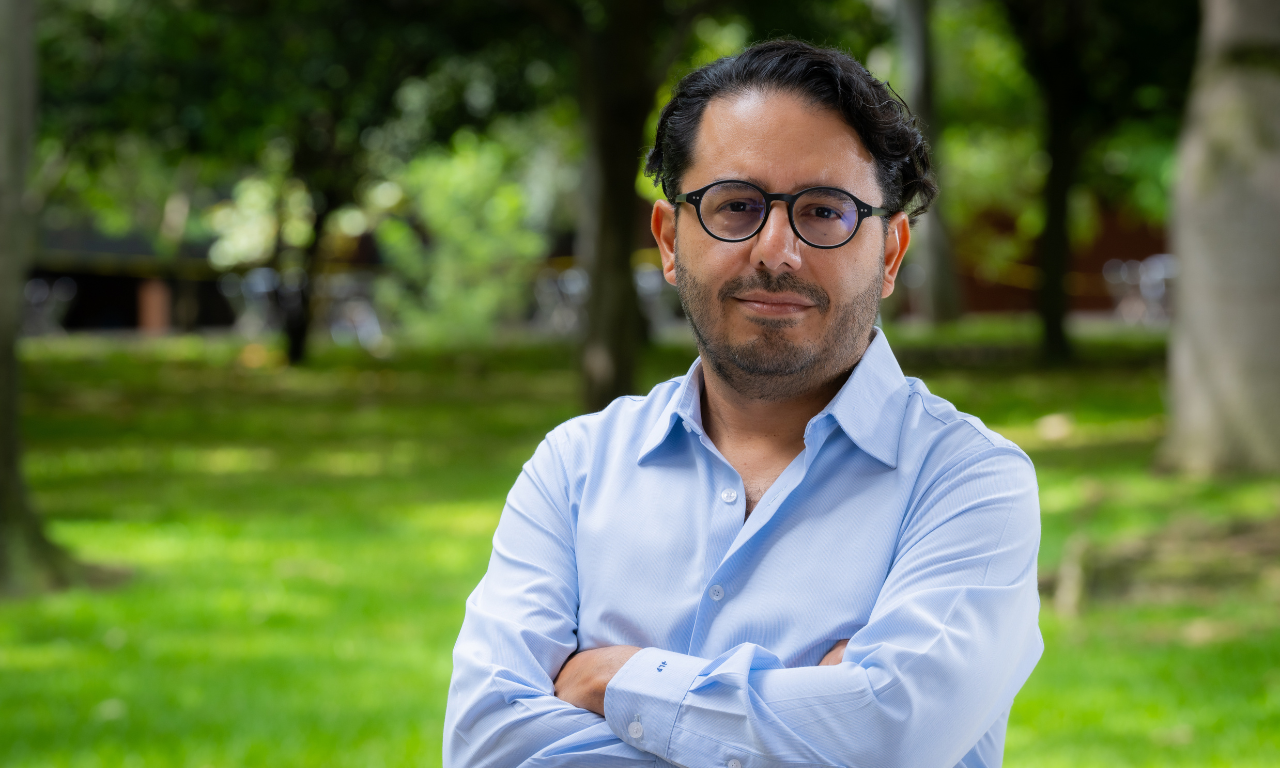
Dr. Juan Sebastián Larrosa Fuentes

Doctor en Medios y Comunicación (Temple University); maestro en Comunicación (Universidad de Guadalajara) y licenciado en Ciencias de la Comunicación (ITESO). Es profesor-investigador en ITESO desde 2019. Ha coordinado los observatorios Etius: Comunicación y Cultura y Quid: Medios y liderado el Laboratorio de Comunicación y Artes Audiovisuales. Su investigación se centra en Comunicación Pública y Política, con proyectos vigentes sobre la comunicación del gobierno federal mexicano y teoría política. Premiado internacionalmente, destacan el Klein-Carnell Rising Scholar Award 2022 y reconocimientos de la Asociación Americana de Ciencia Política (APSA, por sus siglas en inglés) y la Asociación de Estudios Latinoamericanos (LASA, por sus siglas en inglés) por sus contribuciones académicas.

iteso
iteso
Datos de contacto:
33 3669 3434, ext. 3431
larrosa@iteso.mx

CUERPO_ACADEMICO_DESO_CTA3

Cuerpo académico

PUBLICACIONES_DESO_BC7P

DIRECTORIO_DESO_CTA4-5

Directorio

VER MÁS

Investigación en el ITESO

VER MÁS

SignaLab

VER MÁS